
Grace Wisher: The Teenage Indentured Servant Behind Our Iconic National Emblem
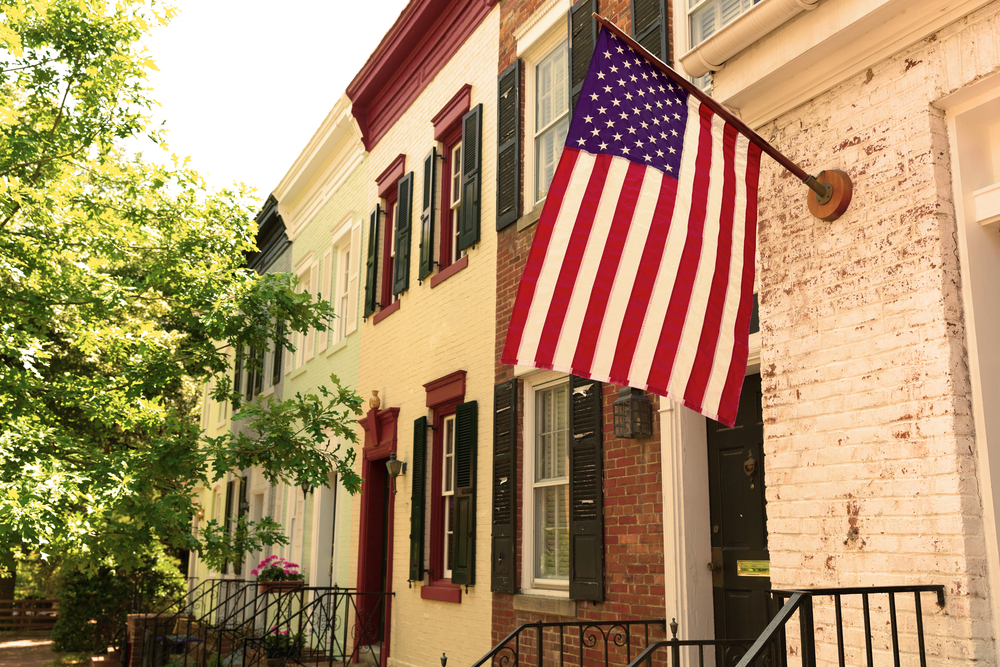
Very little is known about Grace Wisher, a Black indentured servant who assisted in sewing the iconic American flag.
Let’s reexamine our favorite patriotic slogans. Free from the ties (but not the poisonous ideologies). By the people and for the (rich, white, land-owning) people. Let freedom ring (exclusively for a small, unrepresentative minority). Let’s remember, especially this year, that many Americans were not free in 1776; many had to wait until 1865. Let’s reign in this “Independence Day” by celebrating integral Black figures who are too often excluded from our white-washed, cisheteropatriarchal historical narrative. Let’s celebrate Grace Wisher.
we made this country what it is
yet we are unmentioned in the fabric of its pride
countless contributions of threads sewn until fingers bleed the color of its stripes
in between – the white lies of manipulation
our stitching is the reason you’re freewe are Grace Wisher#poetry pic.twitter.com/lx4yHeWcBR
— Shawn Crysis (@ShawnCrysis) July 5, 2020
In the wake of Black Lives Matter, many Americans celebrated their “Independence Day” by reexamining traditional notions of the Fourth of July. Many people re-read Frederick Douglass’ fiery 1852 “The Meaning of July 4th for the Negro” speech and attempted to acknowledge the hypocrisy of a holiday that preaches “freedom,” yet fails to practice it.
Celebration of American independence on July 4 are a reminder of the country’s hypocrisy on the matter of freedom, as slavery played a key role in the nation’s history; even today. What to a slave is the Fourth of July? #FredrickDouglass #FourthOfJulyhttps://t.co/ncLYIUPG6R
— HarrietEve9 (@HarrietEve9) July 6, 2020
Grace Wisher was a teenage indentured servant who played a pivotal role in sewing America’s national emblem. Despite her notable contribution, her role has traditionally been overlooked or undocumented. Wisher is excluded from artist R. McGill Mackall’s well known oil painting depicting the historical flag-sewing. Mackall makes sure to pay homage to Mary Pickersgill, a white woman who helped design the Star-Spangled Banner, along with Pickersgill’s white daughter and niece. However, the teenage indentured servant is erased from this powerful historical moment. America chiefly celebrates a few, iconic leaders; all white and native-born. Since 2014, the Star-Spangled Banner Flag House in Baltimore has strived to promote a more holistic, accurate, and inclusive representation of this historic event. The Baltimore exhibit has notably included the limited information available on Wisher in their exhibitions.
13-year-old Grace Wisher is often overlooked in the storytelling of the nation’s most visual emblem: https://t.co/8tiSJElxhk
— Teen Vogue (@TeenVogue) July 4, 2020
In an effort to celebrate Black women like Grace Wisher, more than 1,000 protestors marched through Boston on Saturday, July 4. These protestors congregated to honor the lives of Black women and demand an end to racial intolerance and police brutality. The uplifting, peaceful protest spanned from Nubian Square in Roxbury to Boston Common. The rally enabled Black Lives Matter allies to unite and pay homage to historical figures we traditionally fail to recognize on the Fourth of July.
Black Lives Matter mural painted on Boston street after thousands of protesters demand justice at 4th of July rally https://t.co/3OizjSWdq9
— masslivenews (@masslivenews) July 5, 2020
In the age of a global pandemic, we are hyper aware of how rapidly viruses spread from person to person. Remember, attitudes are also contagious. Is yours worth catching? Are you doing your part to spread awareness and anti-racist principles? Let’s make courage and fortitude the new norm: Let’s ensure that patriotism is much more than waving a flag. Let’s reach for an Independence Day that is not steeped in racism and exclusion. Rather than claiming freedom, let’s practice it. Let’s start celebrating Grace Wisher and other notable black women.

I am a plucky Sophomore at Wesleyan University with a passion for writing, fashion, running, and extremely strong coffee—so strong that it would make a 6’5’’ WWE wrestler weep. I am a small person with a big personality, only intensified by the coffee, that seeps into both my bold street and writing style. I am currently based in the Washington, D.C. Metropolitan area and am excited to work for such an empowering, female-focused publication. During this trying time in history it is more important than ever for women to continue lifting each other up and spreading positive energy!


