
Universal Pictures

FILM & TV

‘The Odyssey’ Ending Explained: Nolan’s New Epic Hidden Meaning
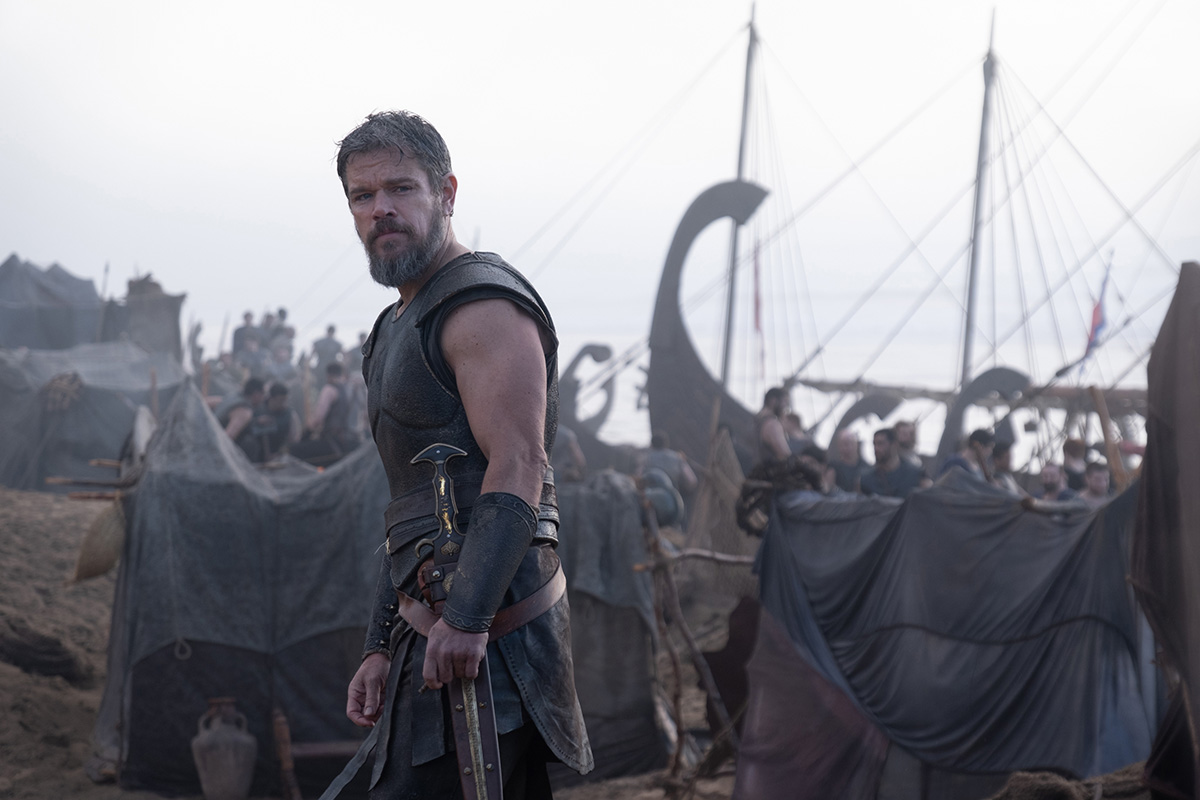
Let me say the quiet part loudly: Christopher Nolan did not make a swords-and-sandals adventure. He made a war film wearing a myth as a mask, and it may be the most punishing, beautiful thing he has ever put on a screen. The Odyssey is his thirteenth feature, the first narrative film in history shot entirely on IMAX film, and already the biggest global launch of his career — an instant awards frontrunner that had the industry roaring from its first CinemaCon footage onward, in a year that suddenly has very little competition. Coming off Oppenheimer, Nolan has essentially made a companion piece in bronze: another story about a brilliant man whose single clever idea unleashes a horror the world cannot put back in the box. If Oppenheimer gave us the father of the atomic bomb, The Odyssey gives us his Bronze Age ancestor.
Universal Pictures

Let me say the quiet part loudly: Christopher Nolan did not make a swords-and-sandals adventure. He made a war film wearing a myth as a mask, and it may be the most punishing, beautiful thing he has ever put on a screen. The Odyssey is his thirteenth feature, the first narrative film in history shot entirely on IMAX film, and already the biggest global launch of his career — an instant awards frontrunner that had the industry roaring from its first CinemaCon footage onward, in a year that suddenly has very little competition. Coming off Oppenheimer, Nolan has essentially made a companion piece in bronze: another story about a brilliant man whose single clever idea unleashes a horror the world cannot put back in the box. If Oppenheimer gave us the father of the atomic bomb, The Odyssey gives us his Bronze Age ancestor.

Let me say the quiet part loudly: Christopher Nolan did not make a swords-and-sandals adventure. He made a war film wearing a myth as a mask, and it may be the most punishing, beautiful thing he has ever put on a screen. The Odyssey is his thirteenth feature, the first narrative film in history shot entirely on IMAX film, and already the biggest global launch of his career — an instant awards frontrunner that had the industry roaring from its first CinemaCon footage onward, in a year that suddenly has very little competition. Coming off Oppenheimer, Nolan has essentially made a companion piece in bronze: another story about a brilliant man whose single clever idea unleashes a horror the world cannot put back in the box. If Oppenheimer gave us the father of the atomic bomb, The Odyssey gives us his Bronze Age ancestor.
Universal Pictures

⚠️ MAJOR SPOILER WARNING. This is a full breakdown of The Odyssey — its ending, its twists, and every hidden layer of meaning. If you have not yet seen it on the biggest screen you can find, bookmark this and come back. You have been warned, darlings.
Let me say the quiet part loudly: Christopher Nolan did not make a swords-and-sandals adventure. He made a war film wearing a myth as a mask, and it may be the most punishing, beautiful thing he has ever put on a screen. The Odyssey is his thirteenth feature, the first narrative film in history shot entirely on IMAX film, and already the biggest global launch of his career — an instant awards frontrunner that had the industry roaring from its first CinemaCon footage onward, in a year that suddenly has very little competition. Coming off Oppenheimer, Nolan has essentially made a companion piece in bronze: another story about a brilliant man whose single clever idea unleashes a horror the world cannot put back in the box. If Oppenheimer gave us the father of the atomic bomb, The Odyssey gives us his Bronze Age ancestor.
Universal Pictures

The Odyssey Is a History-Making Feat of Craft

Before we touch a single theme, we have to talk about how this thing was built, because the how is inseparable from the why. For two decades, IMAX film cameras were so loud and so heavy that directors used them for spectacle and switched to quieter rigs for dialogue. Nolan refused the compromise. Working with a newly engineered camera generation — nicknamed the Keighley — and a purpose-built sound “blimp” that muffles a machine weighing roughly 180 kilograms, he finally shot intimate, whispered close-ups on the format, the camera inches from an actor’s face.
Let me say the quiet part loudly: Christopher Nolan did not make a swords-and-sandals adventure. He made a war film wearing a myth as a mask, and it may be the most punishing, beautiful thing he has ever put on a screen. The Odyssey is his thirteenth feature, the first narrative film in history shot entirely on IMAX film, and already the biggest global launch of his career — an instant awards frontrunner that had the industry roaring from its first CinemaCon footage onward, in a year that suddenly has very little competition. Coming off Oppenheimer, Nolan has essentially made a companion piece in bronze: another story about a brilliant man whose single clever idea unleashes a horror the world cannot put back in the box. If Oppenheimer gave us the father of the atomic bomb, The Odyssey gives us his Bronze Age ancestor.
Universal Pictures

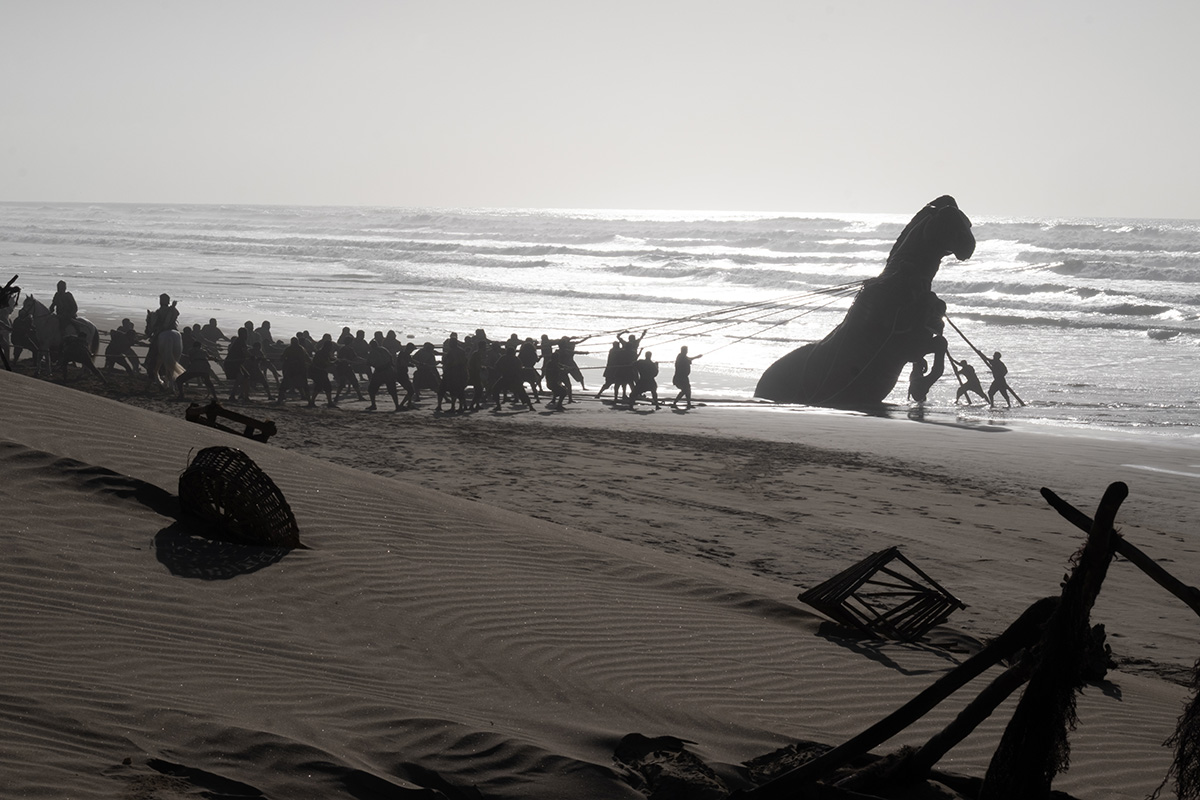
Matt Damon has cheerfully described the unhoused version as sounding like a blender pressed to your head, which tells you everything about the ambition. Across a ninety-one-day shoot in six countries, cinematographer Hoyte van Hoytema lit the ancient world the way it would actually have been lit — by fire, whole scenes flickering in torchlight — while Ruth De Jong’s production design and Jennifer Lame’s editing hold the fragments together. Hades is a black volcanic beach in Iceland; the Cyclops lives in a real cave; and the monsters have genuine mass because many of them are practical, the Cyclops rendered as a physical puppet whose scenes, like Circe’s, tip without warning into pure body horror.

A Score Built From Bronze and Breath

Ludwig Göransson, reuniting with Nolan for a third time, was handed a brief most composers would faint at: no orchestra. As he explained to Variety, the orchestra simply did not exist in this world, so he built a new one from the ground up, researching and reconstructing ancient instruments like the aulos and the lyre, then renting thirty-five bronze gongs of varying sizes to honor the literal Bronze Age setting.
Let me say the quiet part loudly: Christopher Nolan did not make a swords-and-sandals adventure. He made a war film wearing a myth as a mask, and it may be the most punishing, beautiful thing he has ever put on a screen. The Odyssey is his thirteenth feature, the first narrative film in history shot entirely on IMAX film, and already the biggest global launch of his career — an instant awards frontrunner that had the industry roaring from its first CinemaCon footage onward, in a year that suddenly has very little competition. Coming off Oppenheimer, Nolan has essentially made a companion piece in bronze: another story about a brilliant man whose single clever idea unleashes a horror the world cannot put back in the box. If Oppenheimer gave us the father of the atomic bomb, The Odyssey gives us his Bronze Age ancestor.
Universal Pictures

He recorded himself striking scrap metal, railings, whatever rang true, and layered it all with synthesizers and the ghostly vocals of James Blake, who co-wrote the soundtrack’s original song. The result sits somewhere between an archaeological dig and a fever dream, and it is precisely the disorientation Nolan wants: you are never allowed to feel like you have heard this story before.
Let me say the quiet part loudly: Christopher Nolan did not make a swords-and-sandals adventure. He made a war film wearing a myth as a mask, and it may be the most punishing, beautiful thing he has ever put on a screen. The Odyssey is his thirteenth feature, the first narrative film in history shot entirely on IMAX film, and already the biggest global launch of his career — an instant awards frontrunner that had the industry roaring from its first CinemaCon footage onward, in a year that suddenly has very little competition. Coming off Oppenheimer, Nolan has essentially made a companion piece in bronze: another story about a brilliant man whose single clever idea unleashes a horror the world cannot put back in the box. If Oppenheimer gave us the father of the atomic bomb, The Odyssey gives us his Bronze Age ancestor.
Universal Pictures

The Cast of Gods, Kings, and Cameos

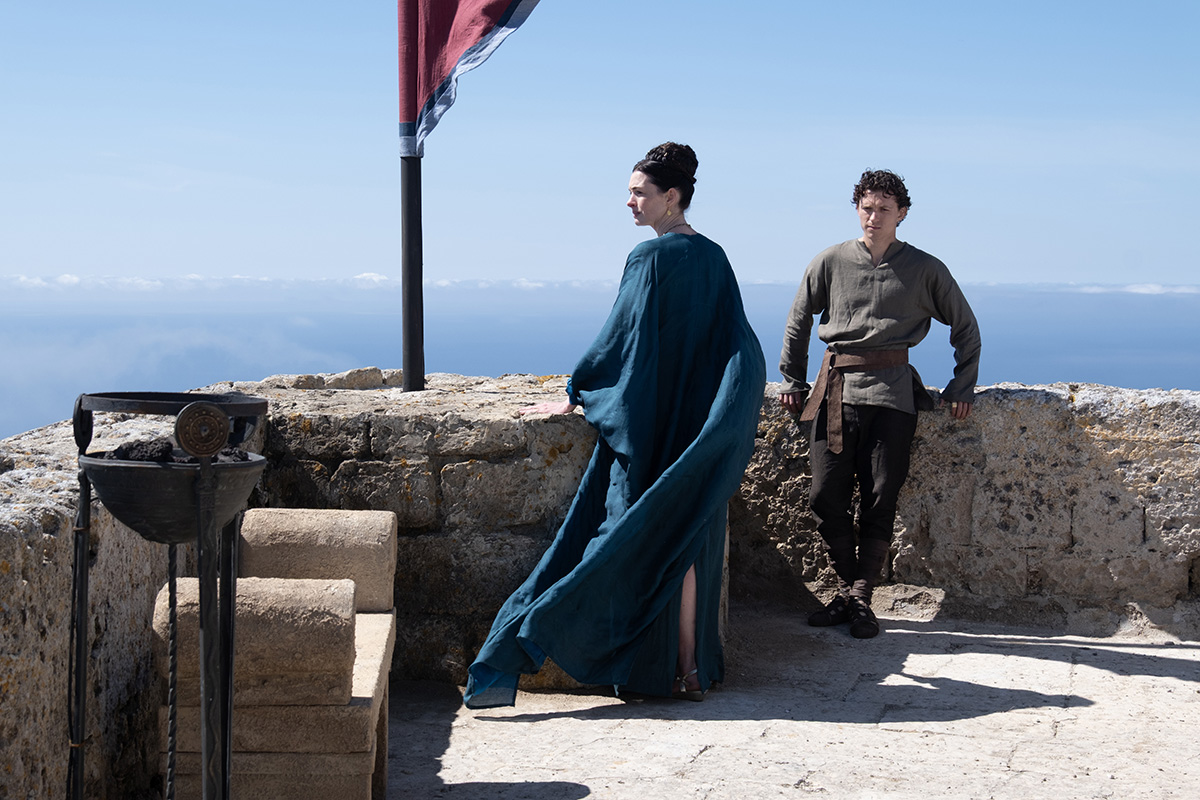
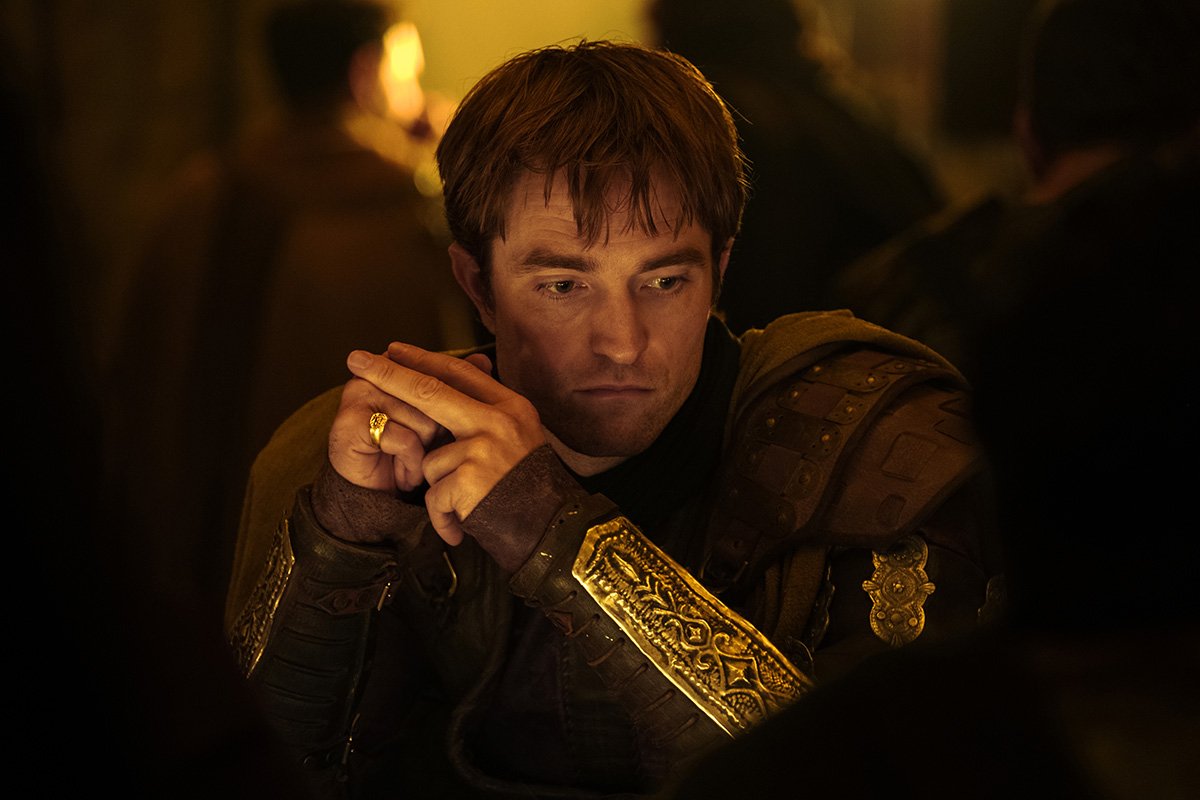
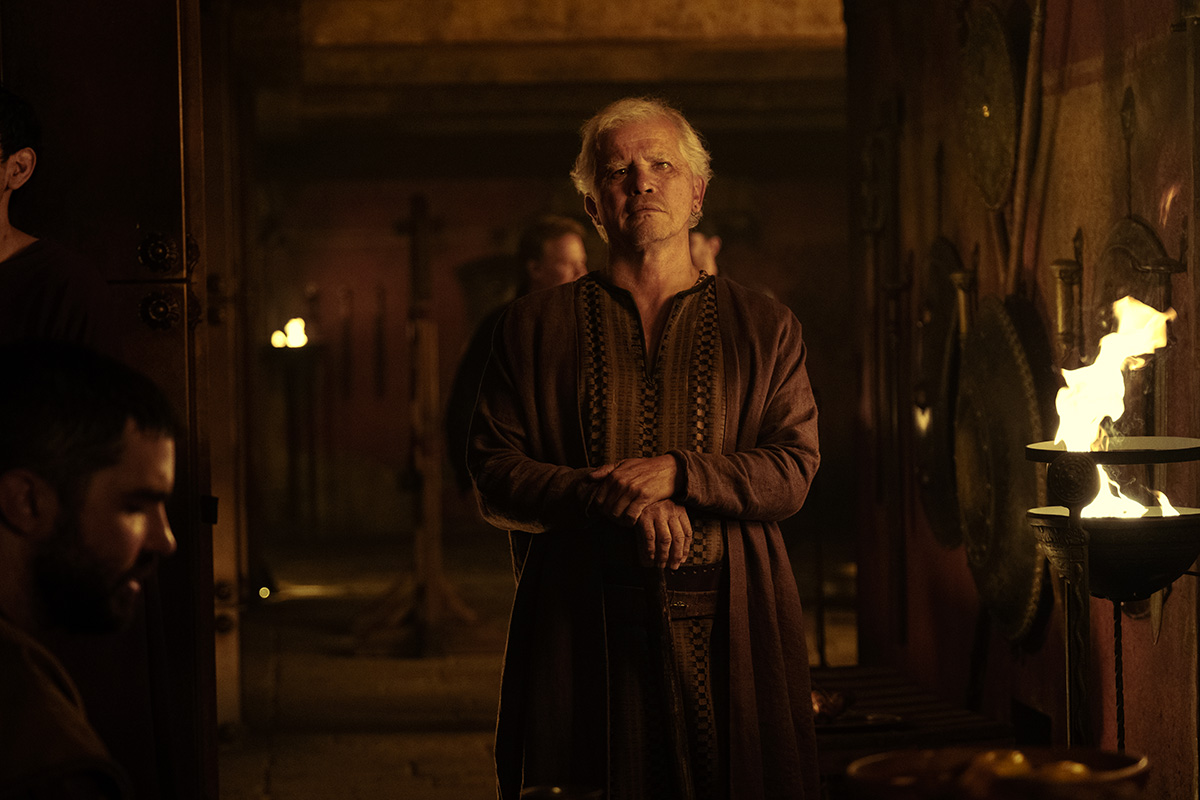
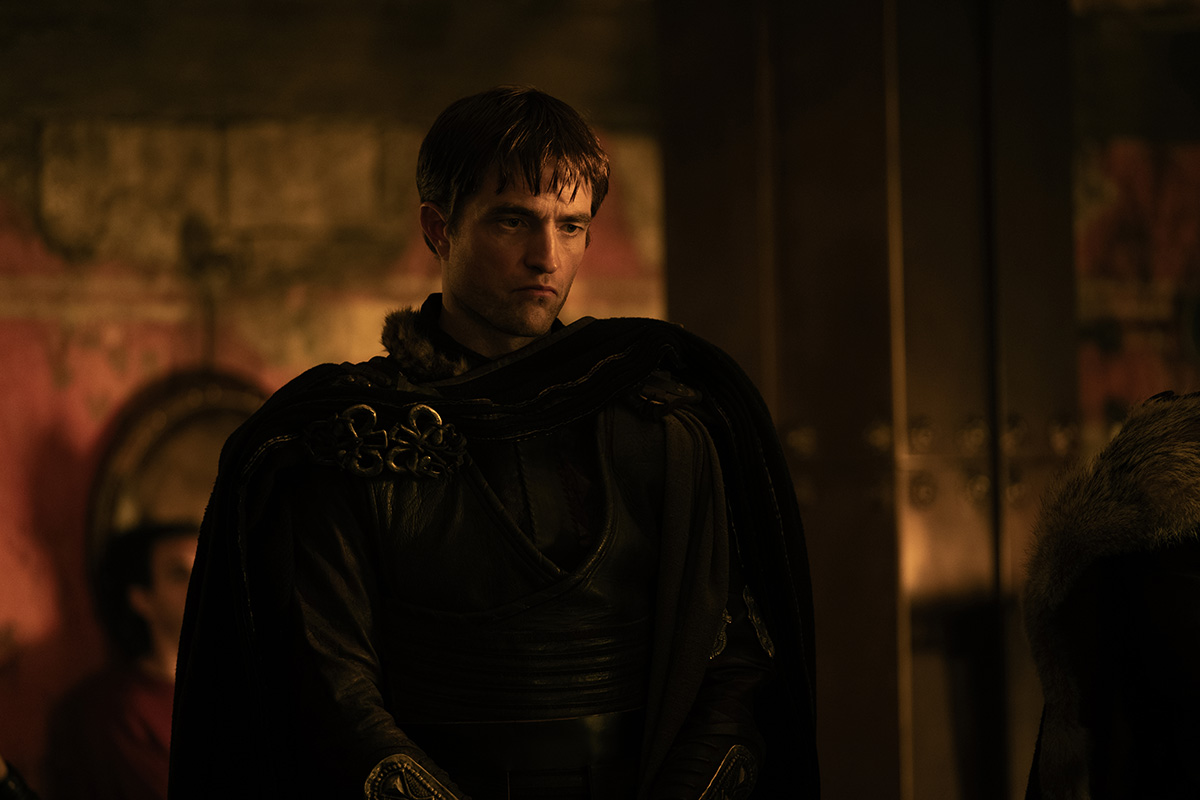
The ensemble is a murderers’ row. Damon anchors it as Odysseus in his third Nolan collaboration, and he has called it the hardest film he has ever made; you believe him. Anne Hathaway, in her third Nolan outing, plays Penelope as something far sharper than a patient wife, while Tom Holland trades Spider-Man for Telemachus, the son straining to become a man his absent father would recognize. Robert Pattinson is a slippery delight as the chief suitor Antinous; Lupita Nyong’o does devastating double duty as both Helen and Clytemnestra; and Zendaya haunts the film as Athena. Charlize Theron is the nymph Calypso, Samantha Morton the sorceress Circe, and Bill Irwin the Cyclops Polyphemus.
Let me say the quiet part loudly: Christopher Nolan did not make a swords-and-sandals adventure. He made a war film wearing a myth as a mask, and it may be the most punishing, beautiful thing he has ever put on a screen. The Odyssey is his thirteenth feature, the first narrative film in history shot entirely on IMAX film, and already the biggest global launch of his career — an instant awards frontrunner that had the industry roaring from its first CinemaCon footage onward, in a year that suddenly has very little competition. Coming off Oppenheimer, Nolan has essentially made a companion piece in bronze: another story about a brilliant man whose single clever idea unleashes a horror the world cannot put back in the box. If Oppenheimer gave us the father of the atomic bomb, The Odyssey gives us his Bronze Age ancestor.
Universal Pictures

Rounding out this astonishing bench, as The Hollywood Reporter detailed in its cast guide, are John Leguizamo as the loyal swineherd Eumaeus, Himesh Patel as Eurylochus, Elliot Page as the doomed soldier Sinon, Jon Bernthal as Menelaus, Benny Safdie as Agamemnon, Mia Goth as Melantho, and Corey Hawkins as Polybus — plus a genuinely inspired bit of casting in Travis Scott as the bard, a choice Nolan has framed as drawing a line between rap and the oral poetry that first carried this tale.
Let me say the quiet part loudly: Christopher Nolan did not make a swords-and-sandals adventure. He made a war film wearing a myth as a mask, and it may be the most punishing, beautiful thing he has ever put on a screen. The Odyssey is his thirteenth feature, the first narrative film in history shot entirely on IMAX film, and already the biggest global launch of his career — an instant awards frontrunner that had the industry roaring from its first CinemaCon footage onward, in a year that suddenly has very little competition. Coming off Oppenheimer, Nolan has essentially made a companion piece in bronze: another story about a brilliant man whose single clever idea unleashes a horror the world cannot put back in the box. If Oppenheimer gave us the father of the atomic bomb, The Odyssey gives us his Bronze Age ancestor.
Universal Pictures

How The Odyssey Reorders Its Own Myth

Here is your structural heads-up: Nolan does not tell this in a straight line. The film opens in the present, in an Ithaca rotting under the weight of Odysseus’ twenty-year absence, with Penelope besieged by a hundred-plus suitors and Telemachus itching to act. Troy and the entire decade-long voyage home arrive as fractured flashbacks, surfacing only as a broken Odysseus forces himself to remember what he did. It is powerful precisely because it is out of order — but for clarity, here is the story chronologically, with a flag each time the film deliberately withholds it.
Let me say the quiet part loudly: Christopher Nolan did not make a swords-and-sandals adventure. He made a war film wearing a myth as a mask, and it may be the most punishing, beautiful thing he has ever put on a screen. The Odyssey is his thirteenth feature, the first narrative film in history shot entirely on IMAX film, and already the biggest global launch of his career — an instant awards frontrunner that had the industry roaring from its first CinemaCon footage onward, in a year that suddenly has very little competition. Coming off Oppenheimer, Nolan has essentially made a companion piece in bronze: another story about a brilliant man whose single clever idea unleashes a horror the world cannot put back in the box. If Oppenheimer gave us the father of the atomic bomb, The Odyssey gives us his Bronze Age ancestor.
Universal Pictures

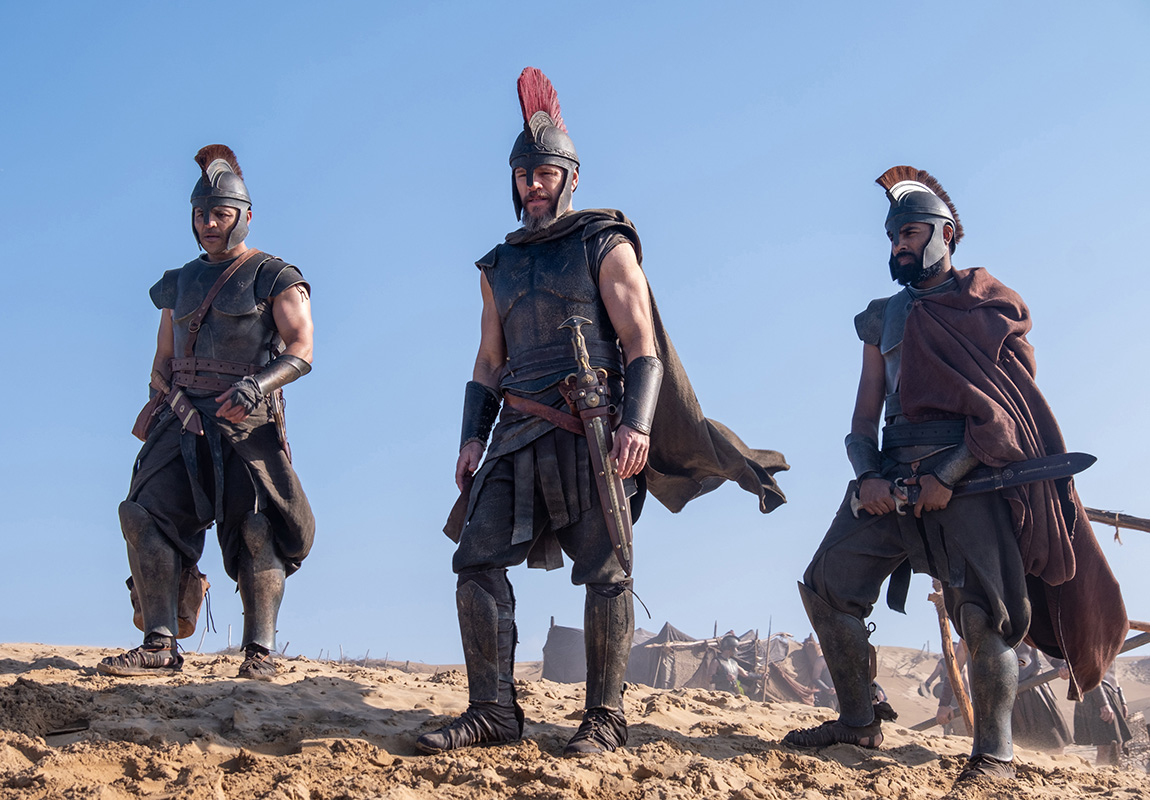
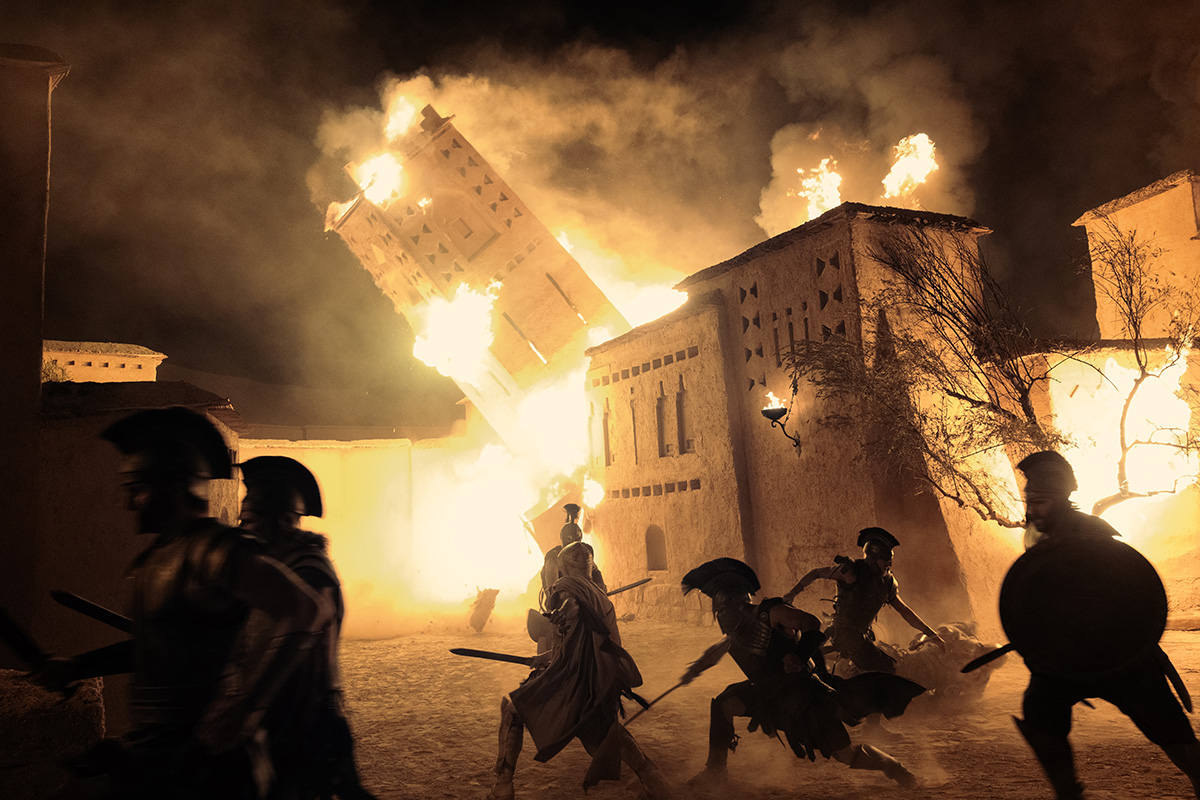
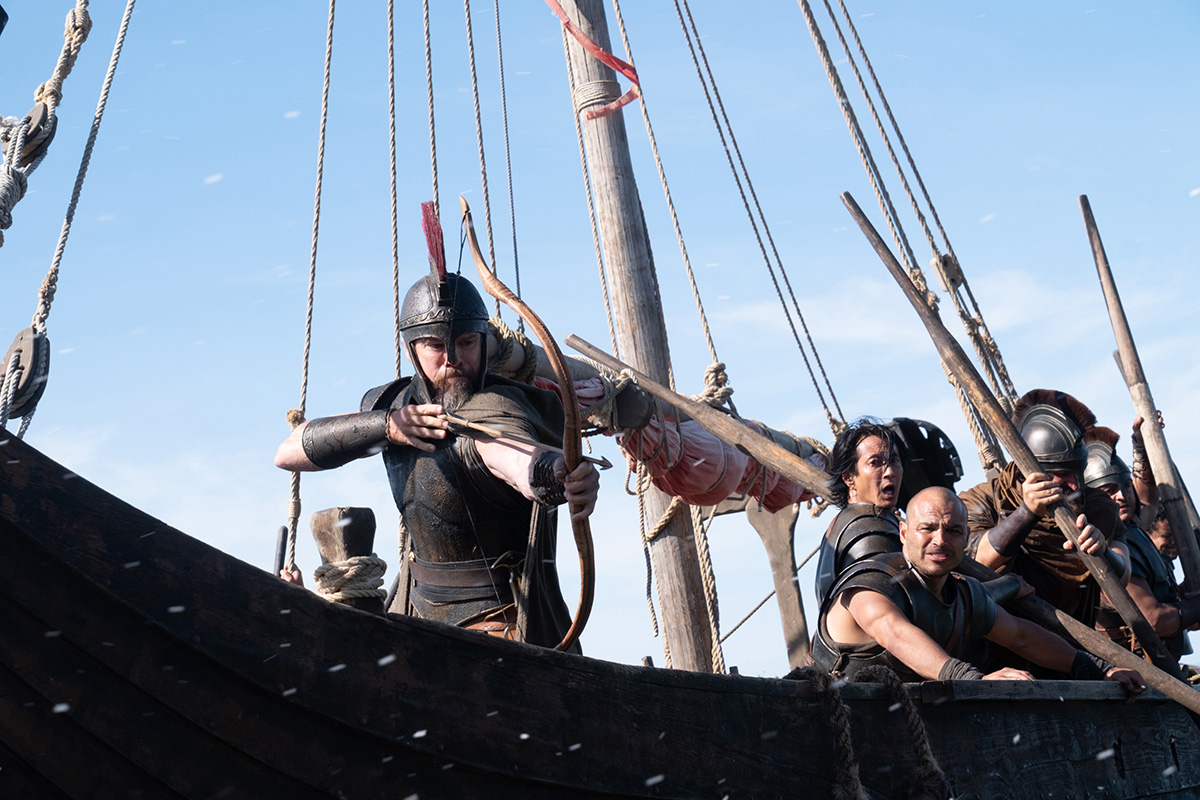
Troy (revealed late). It begins with the trick itself. The Trojan Horse was never a folk-tale gimmick in Nolan’s hands; it is a weapon of mass destruction, and Odysseus is its inventor. He feeds young Sinon to the enemy as a sacrificial pawn to sell the lie, then watches his men burn a civilization, desecrating Athena’s temple in the process. That single sacrilege is the crack through which all his guilt pours for the next ten years.
Let me say the quiet part loudly: Christopher Nolan did not make a swords-and-sandals adventure. He made a war film wearing a myth as a mask, and it may be the most punishing, beautiful thing he has ever put on a screen. The Odyssey is his thirteenth feature, the first narrative film in history shot entirely on IMAX film, and already the biggest global launch of his career — an instant awards frontrunner that had the industry roaring from its first CinemaCon footage onward, in a year that suddenly has very little competition. Coming off Oppenheimer, Nolan has essentially made a companion piece in bronze: another story about a brilliant man whose single clever idea unleashes a horror the world cannot put back in the box. If Oppenheimer gave us the father of the atomic bomb, The Odyssey gives us his Bronze Age ancestor.
Universal Pictures

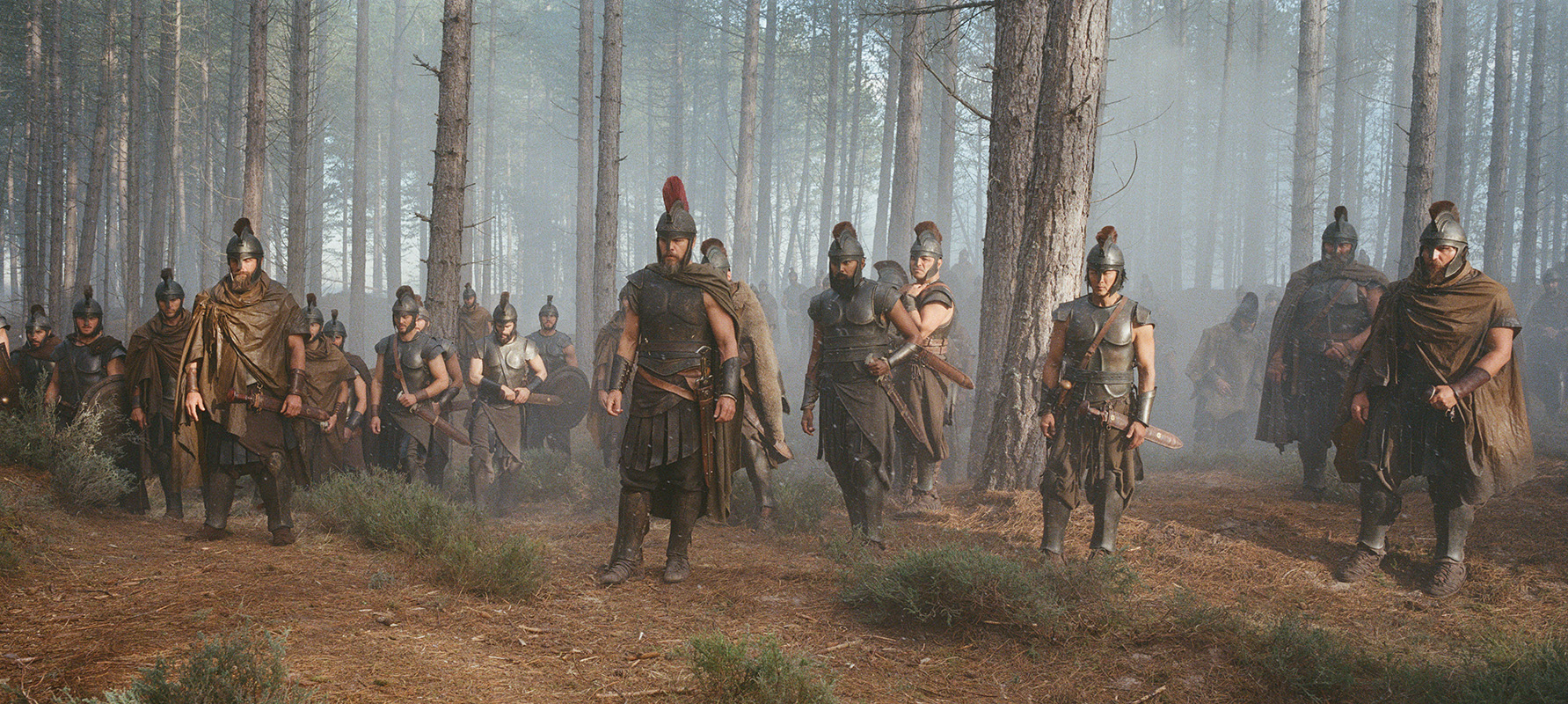
The voyage home (recovered as memory). Nolan compresses and fuses Homer’s episodes, and each becomes a station of the cross. Calypso and the forgetting-flower of the lotus offer escape from guilt. The Cyclops Polyphemus, son of Poseidon, punishes Odysseus’ ego. The armored Laestrygonians turn a massacre into a chilling metaphor for children marched to war. Circe reveals the crew for the ravening creatures Troy made them. In Hades, an army of the dead pursues him — every life his cleverness cost, coming to collect. The Sirens tempt him with the unbearable fantasy of a life where his hands are clean. Scylla and Charybdis force him to knowingly trade six men for the survival of the rest, a decision his crew never even understands is being made for them. And the cattle of Helios seal the crew’s fate entirely, leaving Odysseus alone.
Let me say the quiet part loudly: Christopher Nolan did not make a swords-and-sandals adventure. He made a war film wearing a myth as a mask, and it may be the most punishing, beautiful thing he has ever put on a screen. The Odyssey is his thirteenth feature, the first narrative film in history shot entirely on IMAX film, and already the biggest global launch of his career — an instant awards frontrunner that had the industry roaring from its first CinemaCon footage onward, in a year that suddenly has very little competition. Coming off Oppenheimer, Nolan has essentially made a companion piece in bronze: another story about a brilliant man whose single clever idea unleashes a horror the world cannot put back in the box. If Oppenheimer gave us the father of the atomic bomb, The Odyssey gives us his Bronze Age ancestor.
Universal Pictures

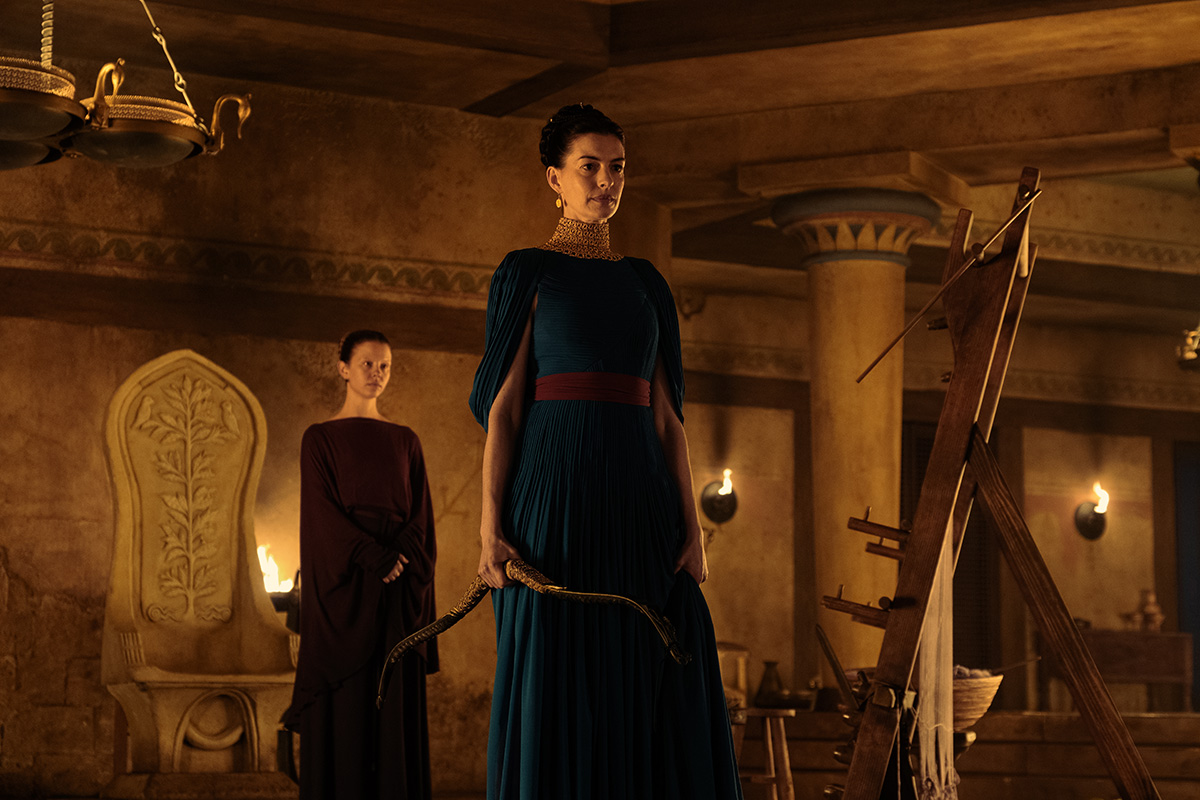
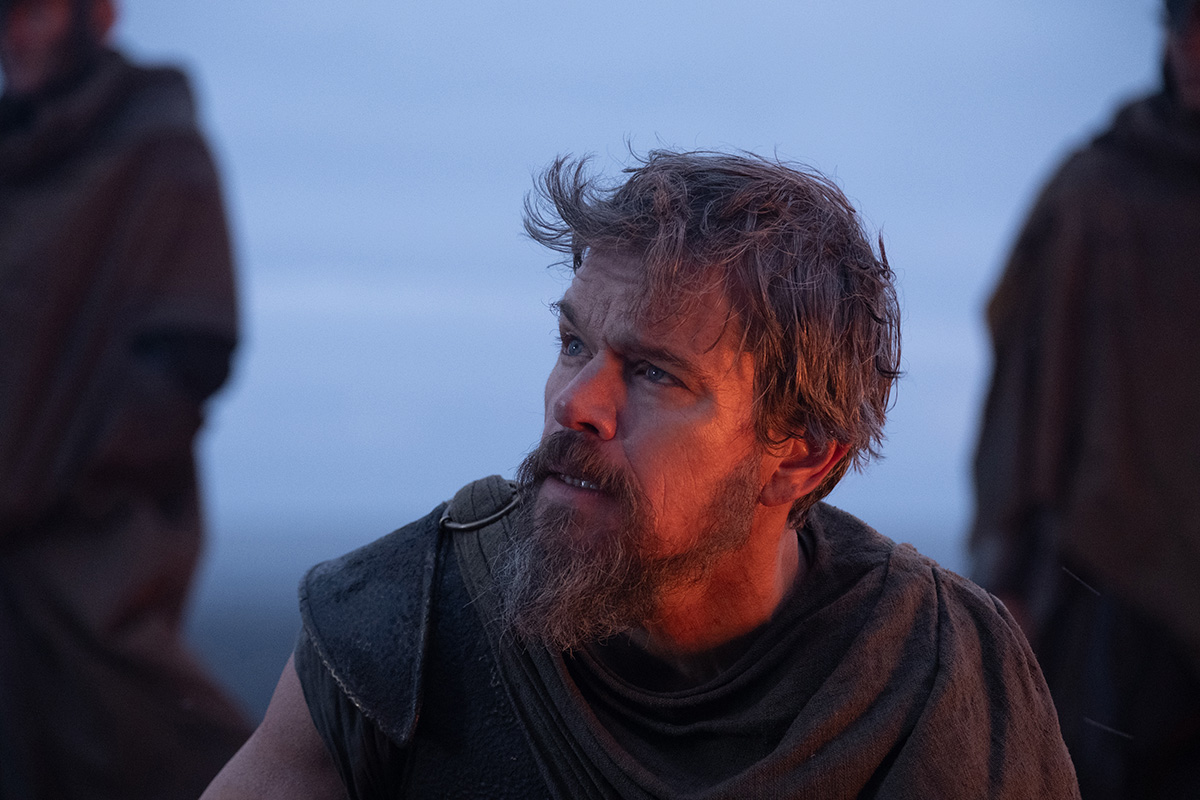
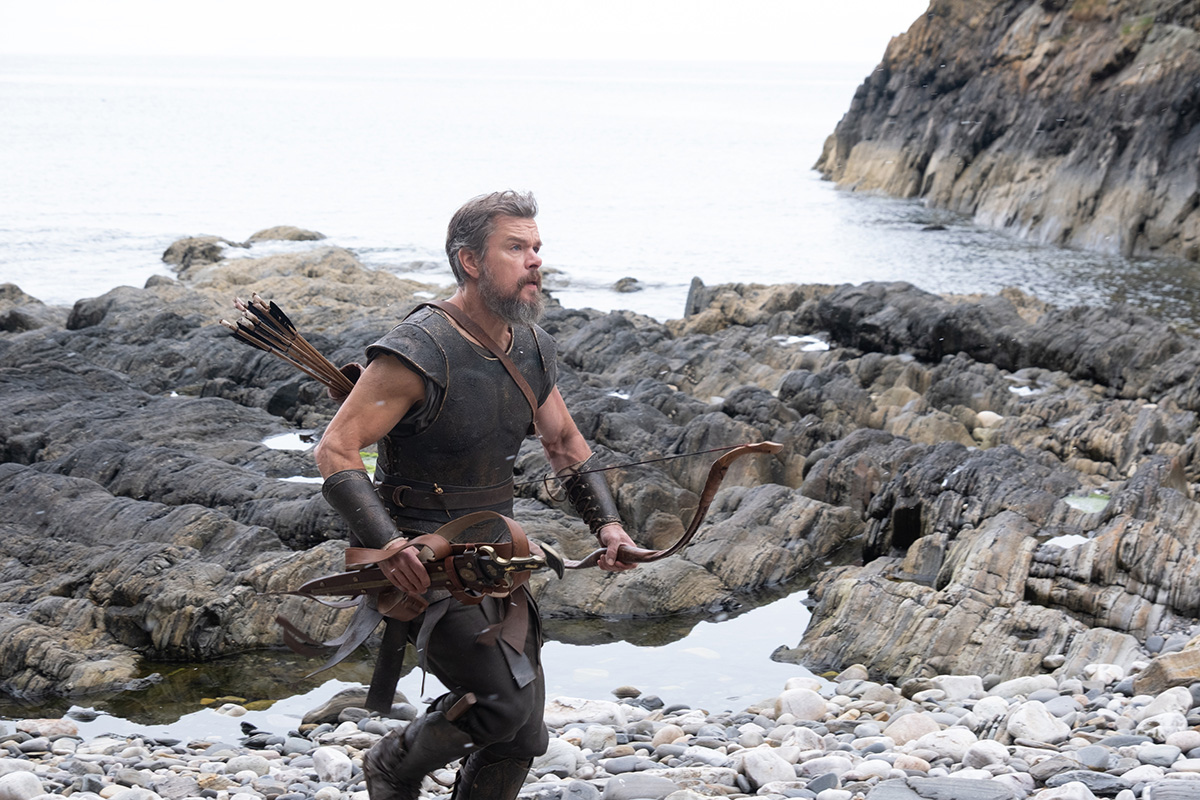
Ithaca (the present). Washed home at last and unrecognized, he moves as a scarred beggar, saving his son from assassination before revealing himself. The gut-punch belongs to Argus, the dog who waited two decades and dies the moment he catches his master’s scent. Then comes Penelope’s trap: the contest of the great bow, the doors locked, the hall stripped of weapons, and a one-against-a-hundred-and-eight reckoning in which Odysseus pointedly stops Telemachus from landing a killing blow on a nobleman, because the law would exile him for it.
Let me say the quiet part loudly: Christopher Nolan did not make a swords-and-sandals adventure. He made a war film wearing a myth as a mask, and it may be the most punishing, beautiful thing he has ever put on a screen. The Odyssey is his thirteenth feature, the first narrative film in history shot entirely on IMAX film, and already the biggest global launch of his career — an instant awards frontrunner that had the industry roaring from its first CinemaCon footage onward, in a year that suddenly has very little competition. Coming off Oppenheimer, Nolan has essentially made a companion piece in bronze: another story about a brilliant man whose single clever idea unleashes a horror the world cannot put back in the box. If Oppenheimer gave us the father of the atomic bomb, The Odyssey gives us his Bronze Age ancestor.
Universal Pictures

The Odyssey Ending Explained: Guilt, Gods, and the People From the Sea

So what is it all about? Read Athena not as a literal goddess but as the manifestation of Odysseus’ trauma — she appears only as hallucination, the face of the temple he let his men defile, the embodiment of a conscience he cannot outrun. The spine of the film’s morality is Zeus’ law of hospitality, the ancient code that says a stranger at your door is sacred; every monster Odysseus meets is, in some sense, a violation of it, and so is he. The film’s most audacious idea arrives when Penelope connects the dots: the “people from the sea” whispered about as an apocalypse are not some external plague. They are the ripple of Odysseus’ own trick, deceit weaponized and set loose until it topples an age — Nolan’s mythic gloss on the very real Late Bronze Age collapse. Redemption, then, cannot look like a hero’s parade. It looks like surrender. Odysseus must stop being the great man and become nobody, and he and Penelope choose exile over the throne, sailing west to honor the dead they left behind. Her twenty years of refusal mirror his — both offered an easy escape from loneliness, both declining it — and that quiet symmetry is the film’s tender, aching heart.
Let me say the quiet part loudly: Christopher Nolan did not make a swords-and-sandals adventure. He made a war film wearing a myth as a mask, and it may be the most punishing, beautiful thing he has ever put on a screen. The Odyssey is his thirteenth feature, the first narrative film in history shot entirely on IMAX film, and already the biggest global launch of his career — an instant awards frontrunner that had the industry roaring from its first CinemaCon footage onward, in a year that suddenly has very little competition. Coming off Oppenheimer, Nolan has essentially made a companion piece in bronze: another story about a brilliant man whose single clever idea unleashes a horror the world cannot put back in the box. If Oppenheimer gave us the father of the atomic bomb, The Odyssey gives us his Bronze Age ancestor.
Universal Pictures

The Verdict

The Odyssey is monumental, formally daring, and emotionally merciless, and it will not hold your hand for a second of its runtime. Some viewers will find it cerebral to the point of cruelty; I would argue that is the whole point of a story about a man who thinks his way into damnation. This is the year’s film to beat, a technical landmark that also happens to have something devastating to say about heroism, genius, and the bill that always, eventually, comes due. Nolan didn’t simply adapt the oldest adventure in the Western canon. He interrogated it, and handed it back to us as a mirror. See it enormous, see it loud, and then sit in the dark a little longer than you need to.