

The Women of ‘The Odyssey’ Quietly Steal Nolan’s New Epic
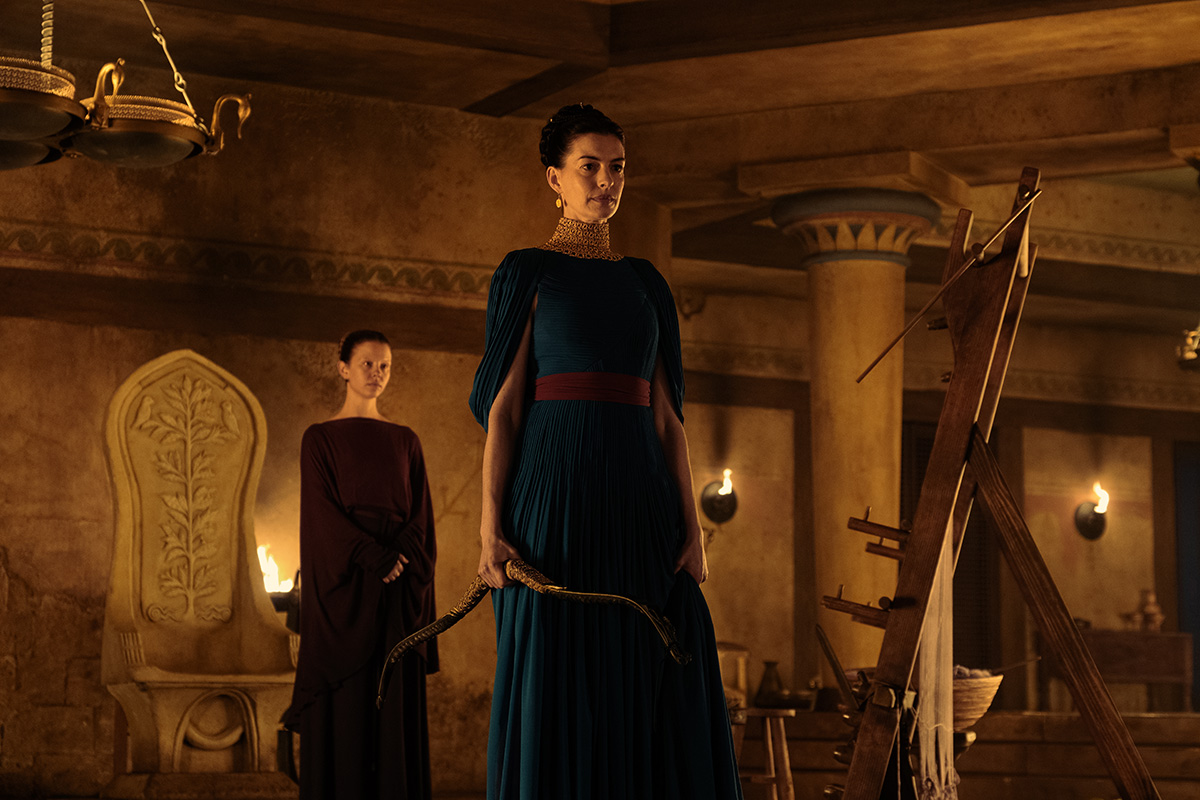
Here is the thing no one tells you before you settle into Christopher Nolan’s The Odyssey: yes, it is Matt Damon’s Odysseus whose name sits in the title, but it is the women of The Odyssey who quietly run the entire show.
They trap him, free him, tempt him, test him, forgive him, and — in the very last act — decide whether he has earned the right to come home at all. For a director once gently teased for writing women as wives, ghosts, and plot devices, this is a genuine turn. Nolan has built an epic in which the female characters are not the scenery Odysseus sails past. They are the map. So let us do what the official trailer only teased and put them at the center of the frame, one by one, and then talk about the gorgeous, aching thread that ties them all together.
⚠️ SPOILER WARNING: This piece digs into the characters, arcs, and ending of The Odyssey. If you have not yet seen it on the biggest screen you can find, bookmark this and come back.
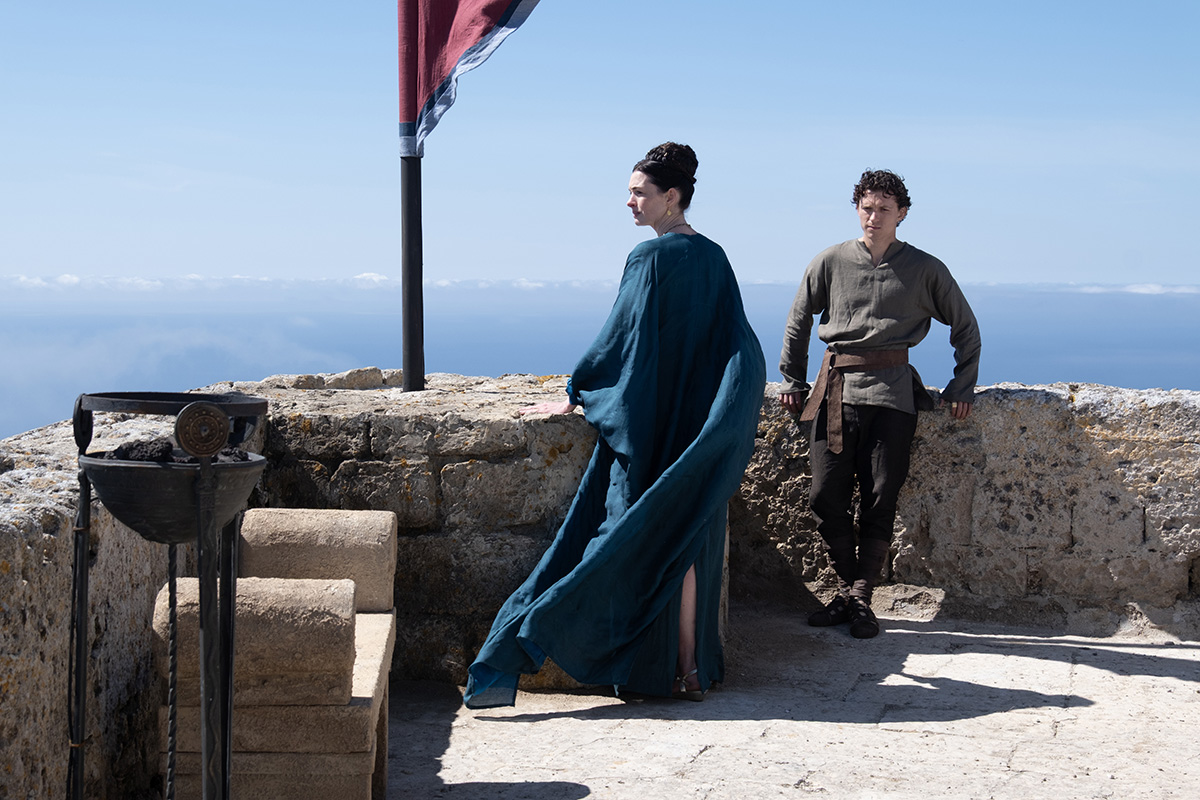
Penelope: The Queen Who Turns Waiting Into Power
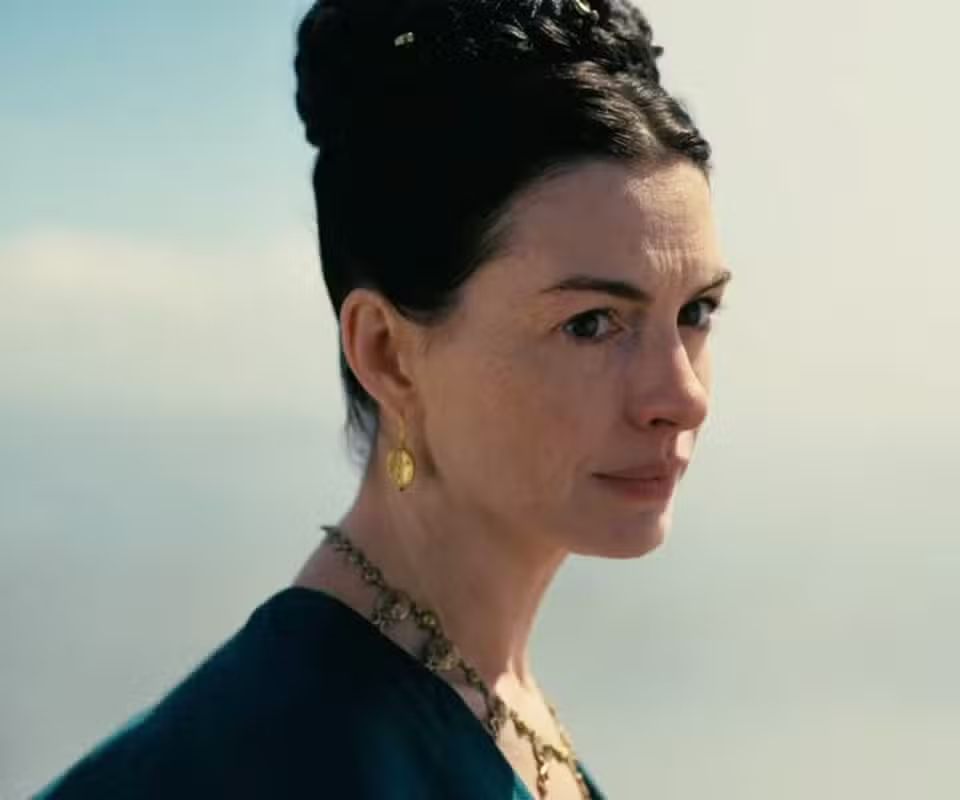
Anne Hathaway’s Penelope could have been a portrait of patience and nothing more — the loyal wife at the window, twenty years of embroidery, a candle in the dark. Instead, Hathaway plays her with a low, banked fury that makes her the most quietly modern person in the film. This Penelope is not simply enduring the hundred-plus suitors who have colonized her home; she is outlasting them, running a decades-long game of stall-and-survive while they eat her kingdom down to the studs.
The famous shroud she weaves by day and unpicks by night is not just a delay tactic here — it is a thesis. Penelope is as much a trickster as her husband, buying time with cleverness because force was never an option available to her. This Penelope is markedly pricklier and more ambivalent than the marble saint of tradition, including toward her own restless son. She is loyal, yes, but she is also tired, sharp, and entirely unwilling to be anyone’s prize. That is what makes her homecoming with Odysseus land like a gut-punch instead of a greeting card.
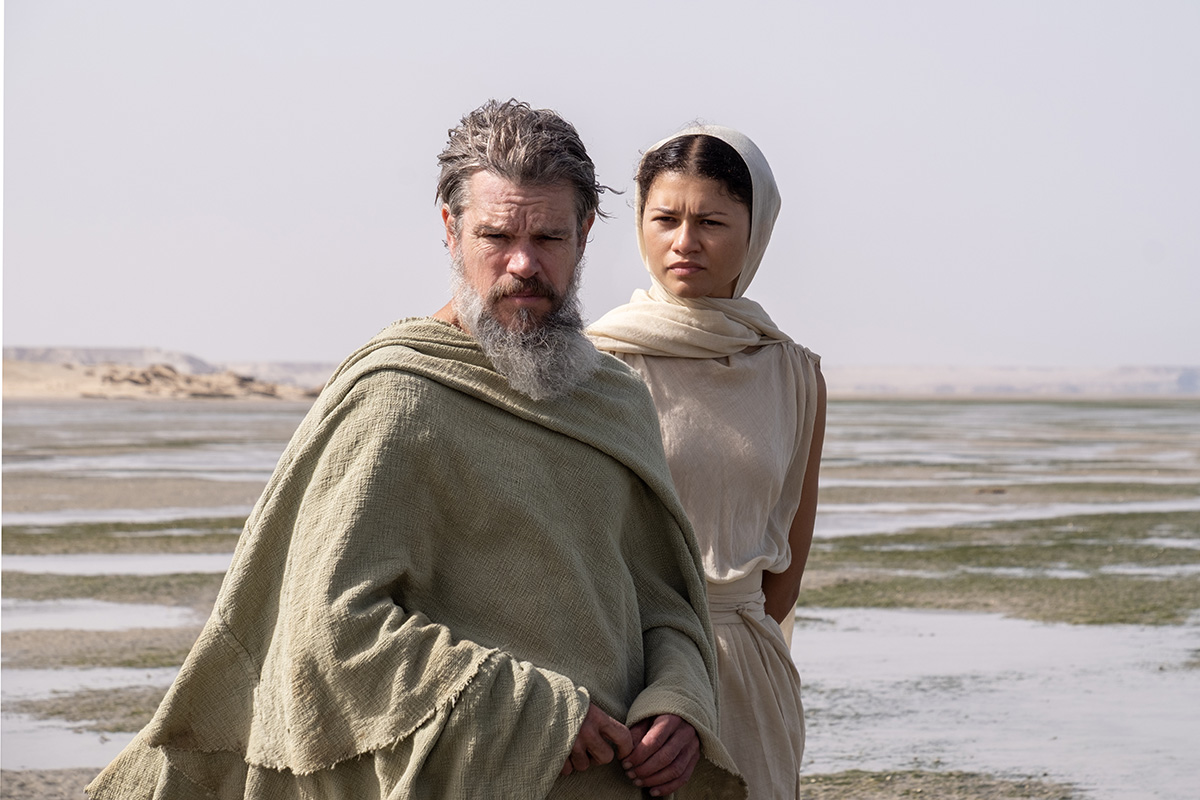
Athena Is the Goddess Who Lives Inside His Head
Zendaya’s Athena is the film’s most daring reinvention, and the one you will still be thinking about on the drive home. Nolan strips the goddess of wisdom of her armor and her battlefield and reframes her as pure clarity — a linen-robed presence who appears only to Odysseus, guiding him not toward victory but toward understanding. The catch, and it is a beautiful one, is that she reads less like a deity and more like the voice of his own conscience. Part therapist, part unsparing life coach, part hallucination.
By the film’s close, it becomes clear that Athena is doing double duty: she is both the shame Odysseus carries out of Troy and the thin, stubborn thread still connecting him to the family he abandoned. She is how a broken man keeps talking himself toward home. Casting the internet’s reigning it-girl as a hero’s inner wisdom is exactly the sly move that makes this version sing — and if you have followed Glitter’s coverage since her first look from the set, you already knew Zendaya was going to do something unexpected with it.
Circe and Calypso: The Women Who Wanted Him to Stay
If Penelope represents home, Samantha Morton’s Circe and Charlize Theron’s Calypso represent everything that tries to keep a person from getting there. Morton plays the island witch as a barn-burning force of nature, and her infamous transformation of Odysseus’s crew into pigs is staged as genuine, stomach-turning body horror — old-school practical prosthetics and cinematic sleight of hand rather than weightless digital gloss. There is a pointed idea underneath the spectacle: Circe turns the men into the animals she believes they already are. It is judgment made flesh.
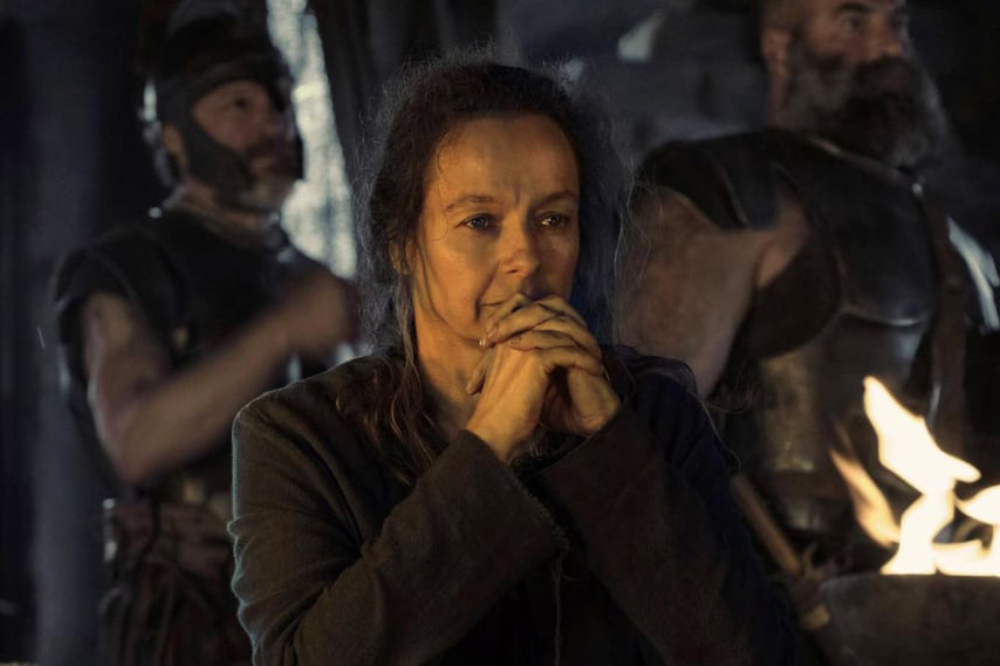
Theron’s Calypso is the gentler, sadder trap. She does not turn Odysseus into anything; she simply erases him from himself, bewitching his memory until years dissolve and home becomes a word he can no longer quite hold onto. Both women are, in their way, mirrors of Odysseus’s own famous cunning — deceivers meeting a deceiver. And crucially, both of them want him. In a story defined by a wife who waits, the women of the journey are defined by the opposite impulse: they want him to stay. That tension — being wanted versus being missed — is the emotional engine of the whole middle section.
Helen, Clytemnestra, and the Cost of a Broken Vow
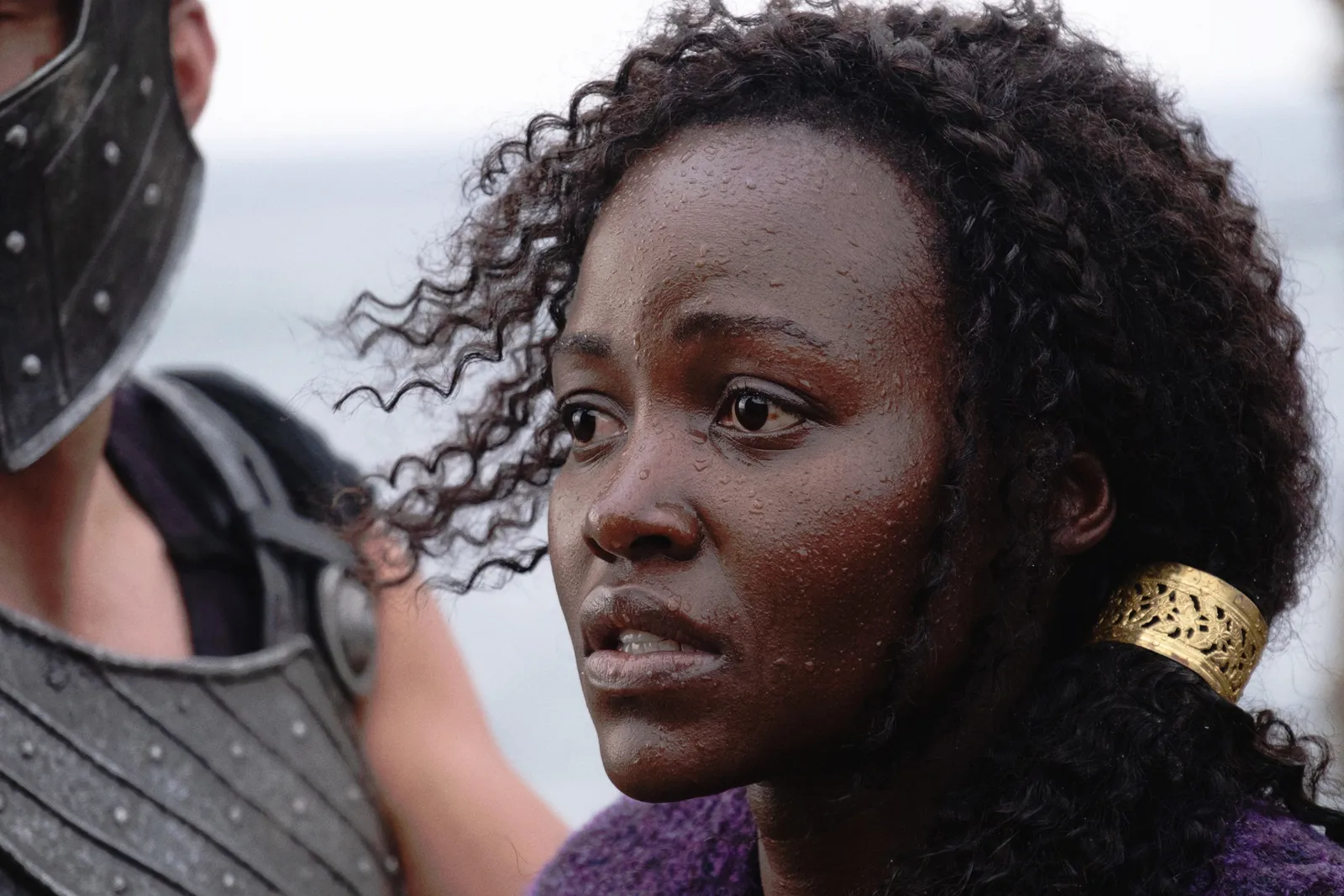
Then there is Lupita Nyong’o, handed the film’s most fascinating assignment: a dual role as Helen, the face that launched the war, and Clytemnestra, the wife who ended one. It is a piece of casting that functions like an argument. Helen is the beauty whose flight to Troy sets the entire catastrophe in motion — the spark. Clytemnestra is what a homecoming looks like when it curdles: Agamemnon sailed back from that same war expecting a hero’s welcome and found a wife who had every reason, and every intention, to end him.
Putting both women in one actress’s body is Nolan quietly holding up a mirror to Penelope. Here is the marriage that survived twenty years of absence, and here, in the same face, is the marriage that did not. It is the film’s darkest, smartest reminder that a faithful homecoming is never guaranteed — it is earned, on both sides. Loyalty, the film keeps insisting, is a choice women make and can just as easily unmake.
The Running Theme Tying the Women of The Odyssey Together
So what actually connects Penelope’s shroud, Athena’s whisper, Circe’s pigsty, Calypso’s fog, and Nyong’o’s twin queens? Look closely and a single, elegant idea surfaces: every woman in The Odyssey is a test of what kind of man Odysseus is willing to become. The journey women (Circe, Calypso) test whether he can resist comfort and forgetting. The goddess (Athena) tests whether he can face what he did. The mirror wives (Helen, Clytemnestra) test whether loyalty can survive time. And Penelope — patient, prickly, unbought — is the final exam. He does not simply return to her; he has to prove, in disguise and stripped of everything, that he is worthy of being let back in.
The film even threads its loyalty spectrum down through the palace, with Mia Goth’s Melantho as the disloyal maid who throws her lot in with the suitors — a small, sharp counterpoint to Penelope’s steadiness. What emerges is not a story where women decorate a man’s adventure. It is a story where women, mortal and divine, faithful and faithless, are the ones holding the moral scorecard. The divine feminine is what quietly paves Odysseus’s road back to himself.
Why the Women of The Odyssey Steal the Whole Epic
Here is my honest verdict, and I say it as someone who has spent a lot of festival seasons watching great directors treat women as furniture: this is the richest gallery of female characters Nolan has ever assembled, and the movie is immeasurably better for it. They are funny, terrifying, seductive, wounded, and wise, sometimes all within a single scene. They are the reason a three-hour war epic feels like it has a heartbeat, and the reason it is worth catching on the biggest IMAX screen you can find.
Odysseus may get the homecoming and the title card. But if you walk out of The Odyssey thinking about anyone, it will be a woman weaving in the dark, a goddess made of guilt, a witch with a herd of pigs, or a queen with a knife and a very long memory. The men fight the war. The women decide what it meant.
Want the other half of this story? We broke down what Odysseus himself learns on that long road home in our companion piece — because the women set the tests, but he still has to pass them.

Award-Winning Publisher